
back
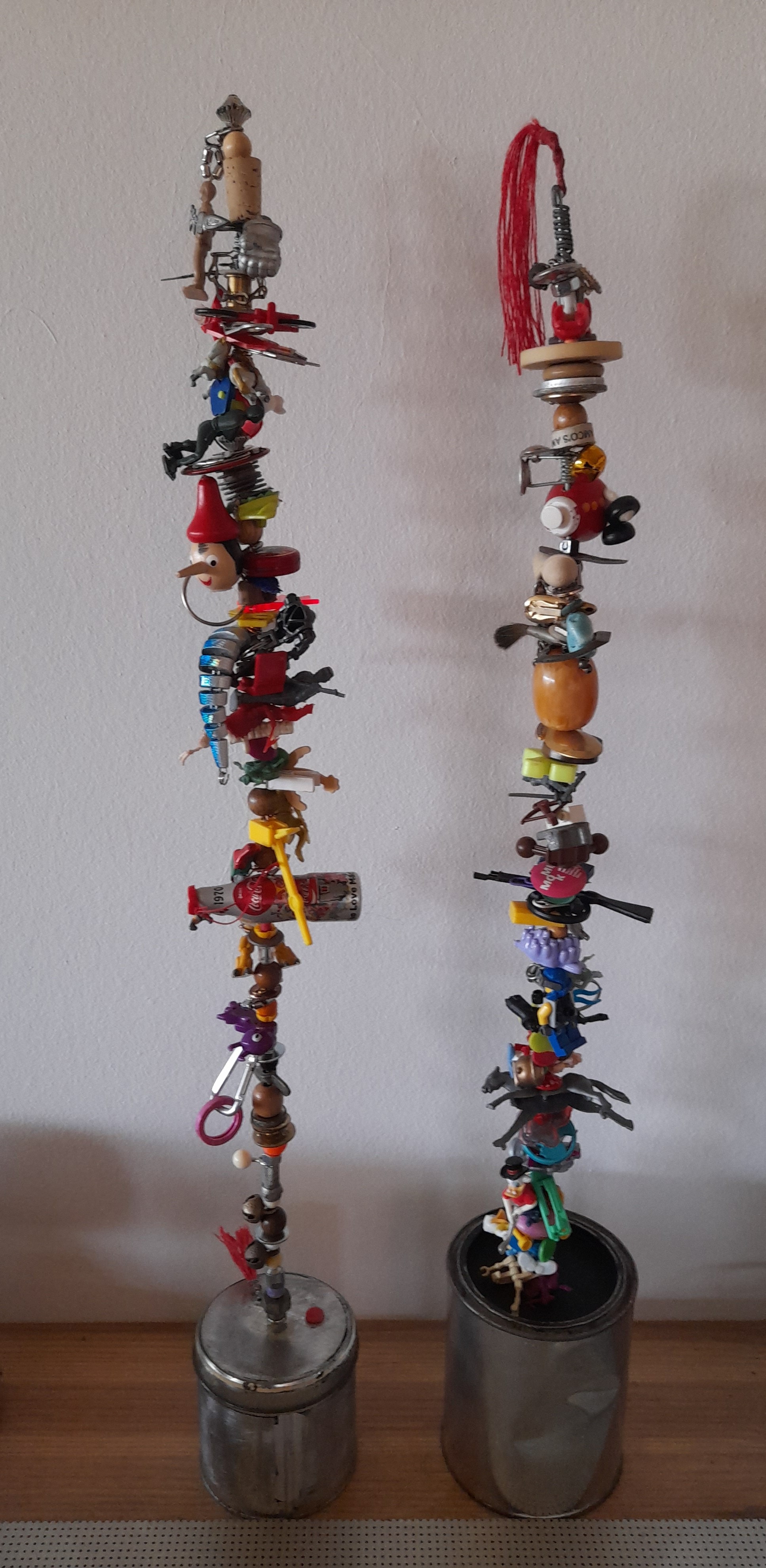
One way or another III
Đanino Božć
03/07/2026
Đanino Božić is a versatile artist, researcher and creator for whom pushing boundaries is the main challenge. Since he masters the classical métier of painting, he can explore the ‘image’ by applying modern conceptual and abstract approaches. However, he is not a modernist, nor a postmodernist, perhaps his artistic credo is closest to meta-modernism, because he preserves the seriousness and purity of modernity, while at the same time connecting it with the playfulness and irony of postmodernism. However, Đanino Božić, with his artistic practice, consciously and consistently transcends not only the a priori concept of images, but also all, even the most contemporary meta-modernist theoretical discourses.
Creative analysis and exploratory synthesis are so close in his artistic field that the spark of inspiration seemingly jumps from one pole to the other with ease. Through playful and agile visual experimentation, he always builds on each new temptation with personal experience. But not only for himself – he plays to reward others as well. He is not only interested in visual effects, but also in the material carriers of images. Therefore, it is not surprising that Nevenka Žiger, on the occasion of his exhibition at the Small Salon in Rijeka, already in the late 1980s, wrote down almost prophetic words: »… the wall as a flat surface, but also as something built – bricked. Also as a promise of a different world, the one ‘on the other side’. What a challenge, – to peek across!« And that can always be done one way or another.
Đanin Božić’s tireless search for a different and different world is also evident in his archiving of his own paintings and old books, which warns of a new relationship between the preserved and the removed, the visible and the invisible. In doing so, he takes seriously Foucault’s thesis that the archive is a system of power and Derrida’s desire to question the deeper reasons for preservation, just as he respects Boris Groys’s insight that the archive is not a neutral space of preservation, but a mechanism of cultural power that determines what will remain visible and inscribed in “historical memory”. In this context, he is also close to the verses of the poet Edvard Kocbek: “On history, the blind restlessness of humanity, … the exercise of memory and the sweetness of oblivion”. That is why Đanino Božić takes the archive into her own hands; she does not leave the scissors and canvases – especially her own – to others.
She ‘preserves’ the paintings by cutting them up and redefining them into a smaller form, whereby this ‘cut’ acquires a new plastic value. In this way, she is ahead of art historians because she does not ideologically compromise the paintings, but neutrally ‘compresses’ them and thereby recomposes them. In doing so, she is not only interested in a fashionable change in the external point of view, but also in the organization and development of the internal structure.
Božić surprises because he connects the incongruous with great precision and consistency. Each of his cuts is also a connection, a memory of a moment, of the first impulse, of that gesture when Lucio Fontana first cut into the canvas. The archive is alive if it maintains contact with the beginning, with the arche…
A cut book, which bears witness to the written and the unwritten, seems shocking at first glance, but the impression of destruction is only momentary. The book is not sacrificed for aesthetic effect; it is actually saved from oblivion in order to bear witness to its own indestructibility. “Manuscripts do not burn,” writes Mikhail Bulgakov.
A recognizable feature of Božić’s exhibitions is the meticulous structuring of works within real space, which establishes a subtle correlation between the individual and the whole. For him, the exhibition space itself is not just an external given or passive environment, but a dynamic field of action. Therefore, he does not exhibit his works simply by sequencing them: he always composes them anew in harmony with the concrete architecture. That is why each of his exhibitions, including this one at the Alvona Gallery, is an original spatial composition – or, more precisely, a constellation, as he himself called one of his exhibition cycles.
Janko Rožič
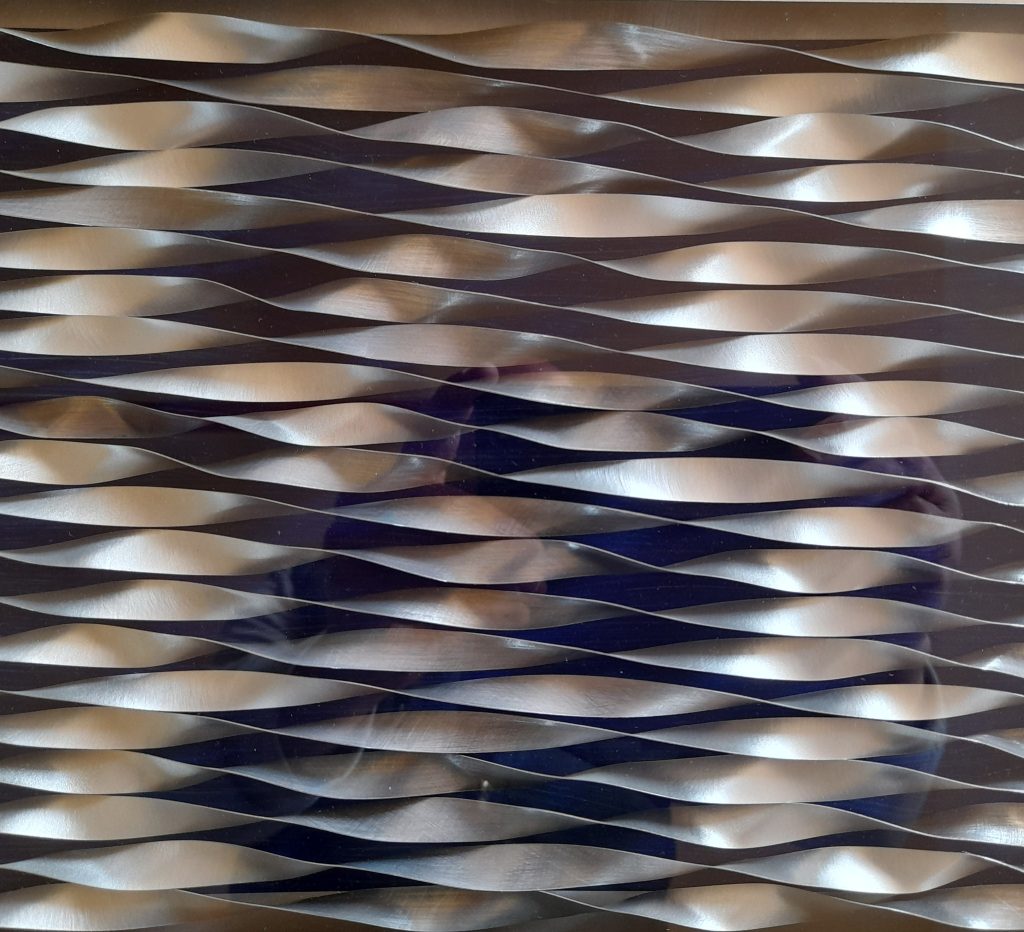
Đanino Božić (Pula, 1961) has been active on the art scene since 1984. She works in painting, sculpture, graphics, drawing, art books and spatial installations. She is one of those contemporary Croatian artists for whom we never know what she will exhibit and in what direction her concept will develop. From her beginnings to the present day, she has been creating, exhibiting at numerous solo or group exhibitions in Croatia and abroad, and curiously following current events in the art world.